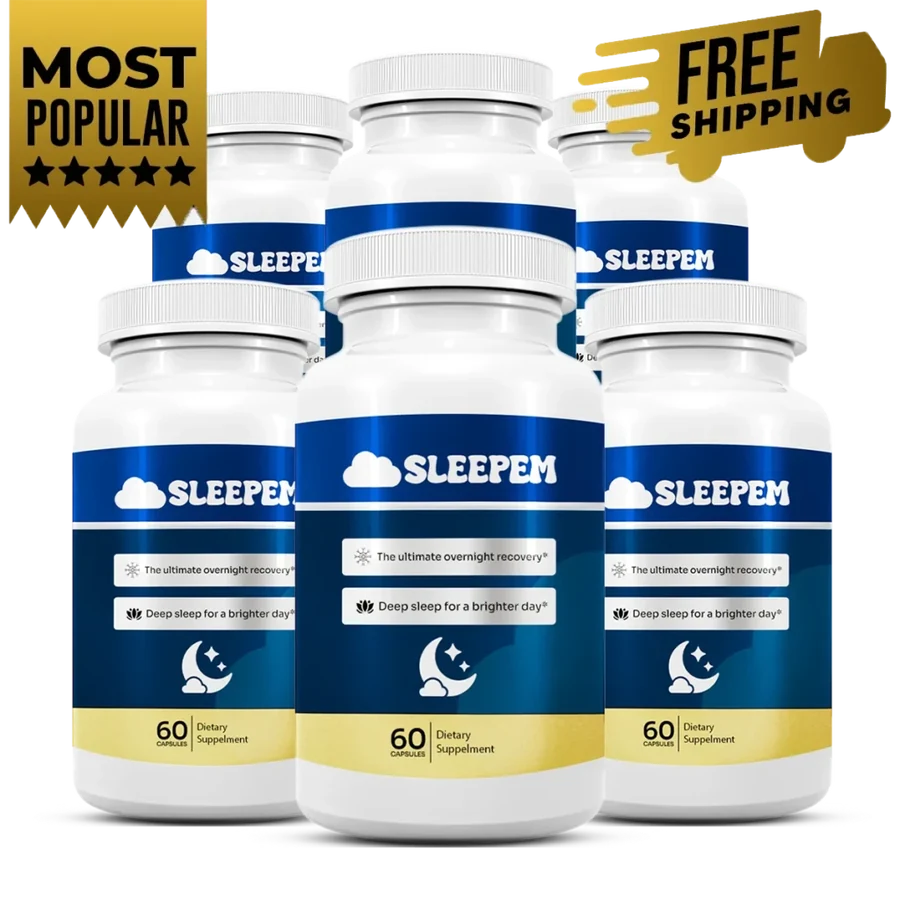
How Does Sleepem Work?
Sleepem's stated mechanism pairs a direct sleep signal with amino-acid pathway support, calming neurotransmitters and traditional relaxant botanicals.
Individual ingredients carry genuine research; the finished formula itself does not appear to have its own published trial.
Melatonin: the direct sleep signal
Melatonin is the most-studied ingredient in the sleep-support category, signaling to the body that it is time to sleep. At 10mg, Sleepem's dose sits at the higher end of what's commercially available. See our full piece on melatonin dosing.
L-Tryptophan and 5-HTP: the serotonin-melatonin pathway
L-Tryptophan is a direct dietary precursor to serotonin, which the body converts to melatonin. 5-HTP works further along the same pathway. Including both creates a layered approach to this production chain, though the individual dosages within the 905mg blend are not disclosed.
GABA and L-Theanine: calming an overactive brain
GABA is the body's primary inhibitory neurotransmitter. L-theanine is a calming amino acid found in tea leaves. A published study in the journal Nutrients found a GABA and L-theanine combination increased non-REM sleep duration compared to either compound alone. See our piece on GABA, L-theanine and tryptophan.
Ashwagandha and the botanical relaxant layer
Ashwagandha carries a substantial research base on stress and cortisol; a 2019 PLOS ONE study linked it to improved sleep quality and onset latency. Chamomile, passionflower, lemon balm, hops and skullcap round out the formula's traditional relaxant botanicals.
What the mechanism does not establish
Everything above concerns individual ingredients and general biological mechanisms, not a clinical trial of the finished Sleepem formula, which does not appear to exist. See the full ingredient list and read our St. John’s Wort safety breakdown before ordering.